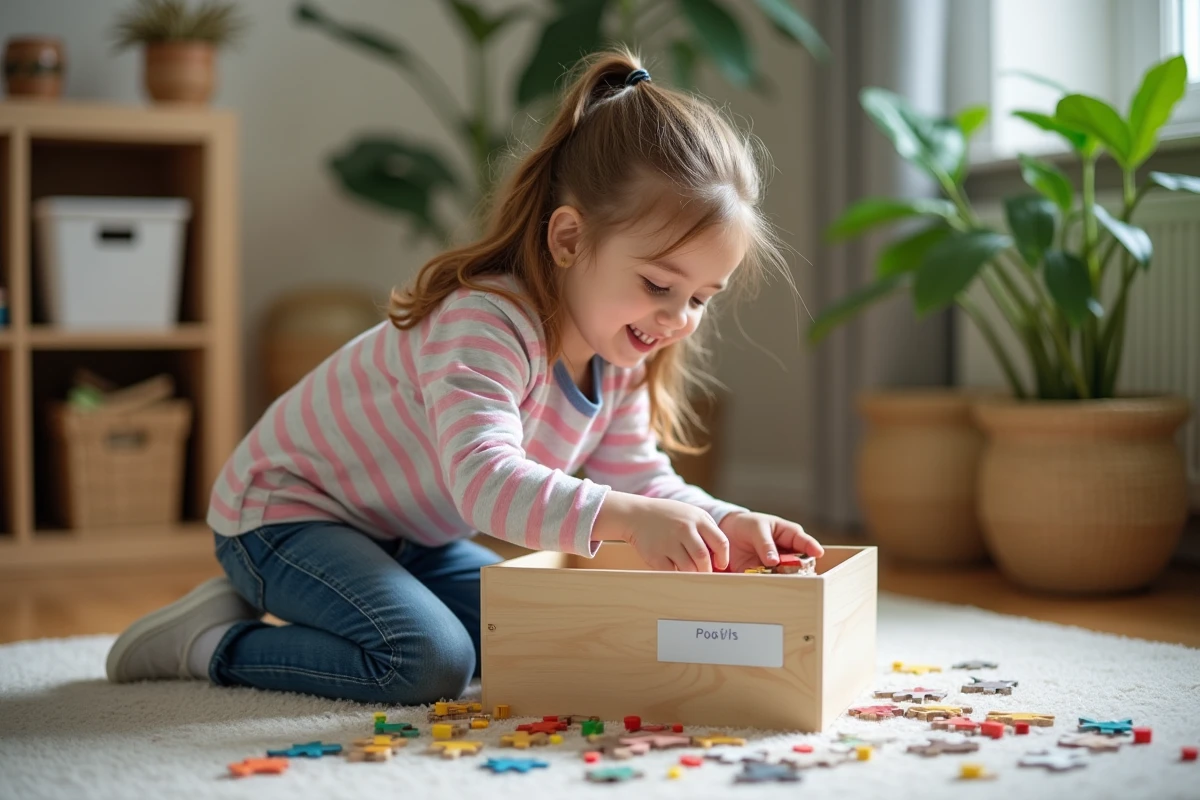
A missing piece is enough to make a puzzle unusable. The original boxes, often fragile or bulky, are not designed to survive repeated use. The rapid accumulation of models in different sizes complicates daily management.
Simple and practical solutions can, however, prevent dispersion and disorder. Some lesser-known methods maximize storage space while facilitating children’s autonomy.
Why are puzzles taking over the house? Understanding the storage puzzle
In many households, the puzzle has gained its status as essential among children’s games. Kids ask for it, parents bring it out to share quiet time or stimulate logic. But very quickly, the multiplication of boxes and the diversity of formats turn the room into a minefield: scattered pieces, damaged boxes, mixed collections. Managing a puzzle accumulation quickly becomes a challenge, especially when each model has dozens, if not hundreds, of small pieces.
The puzzle consists of hundreds of small pieces that slip under furniture, sneak into the carpet, or mysteriously disappear. The original boxes, rarely designed to last, end up deformed or opened too often. The assembly, initially a source of pleasure, turns into a hassle without a method, eventually discouraging the child from playing with an incomplete puzzle.
Some organized parents find their salvation in labels and classification: number of pieces noted, box stored by difficulty, everything is designed to easily find each puzzle. But opportunities to add new models are plentiful: gifts, parties, impulse buys… The pile grows, space shrinks, and it becomes urgent to change strategy.
To break this deadlock, reading tips on Astuces Parents allows you to adopt concrete methods that are easy to apply daily. Rethinking storage means restoring the puzzle’s role as a creative game and preserving calm at home.
Simple tips for sorting and organizing puzzles with children
Managing puzzles, often improvised in haste, benefits from becoming a family project. Involving children in the storage process changes everything: a sorting tray provides a defined area to gather pieces, limit losses, and keep a tidy space. This tool encourages sorting by shape, color, or size, while developing motor skills and autonomy.
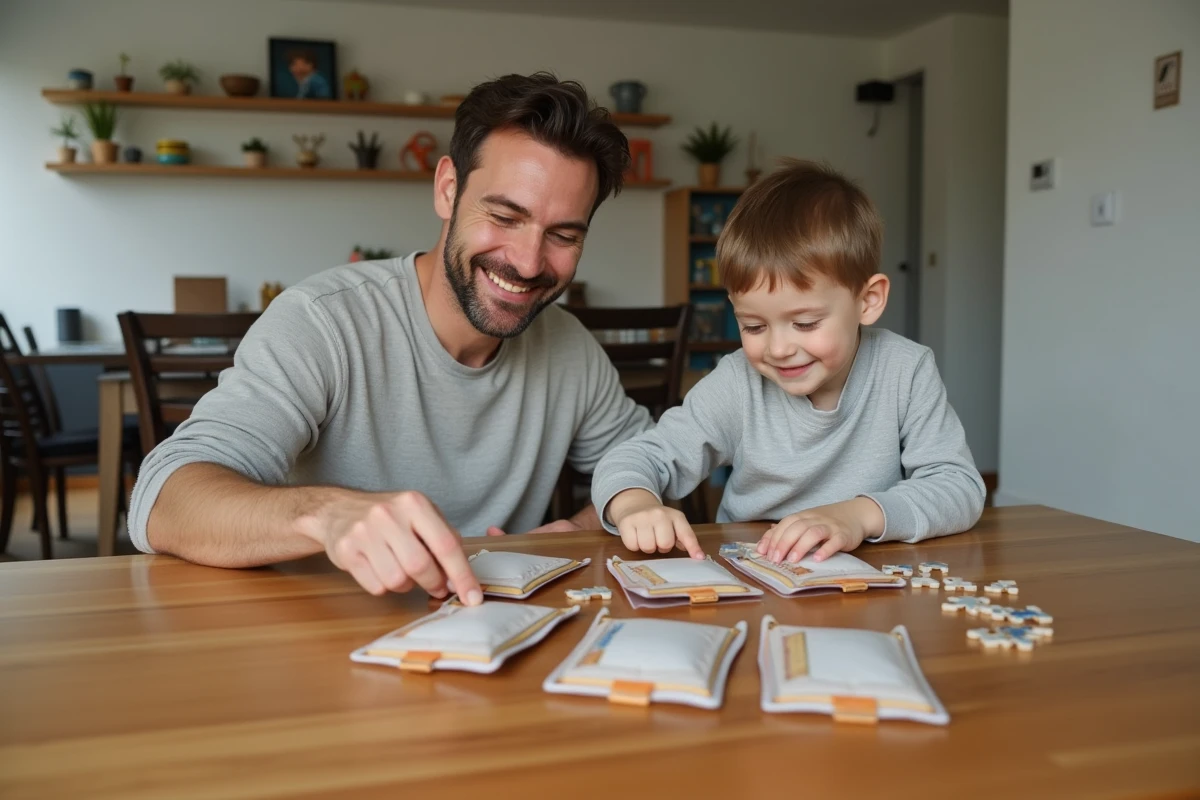
To avoid confusion, many opt for zippered bags or pouches. Practical and sturdy, they protect the pieces from mixing and disappearing. Pencil cases, or even small containers repurposed, work very well to distinguish each model by age, difficulty, or theme.
Setting up sorting spaces at child height transforms storage into a game. Everyone participates, chooses, and organizes their puzzles, which fosters creativity and the desire to build. Child-friendly furniture makes everything accessible and encourages initiative.
To go further, Astuces Parents offers detailed advice tailored to all situations: simplifying storage, protecting pieces, and strengthening the collective dynamic around play.
10 clever ideas for storing puzzles and gaining serenity in daily life
Optimize space and protect pieces
Here are several solutions that keep puzzles accessible, protected, and well-organized:
- The storage bin gathers several puzzles in one place, limits dispersion, and facilitates access. It fits well in a child’s room as well as in the living room.
- The storage drawer, reserved for puzzles, separates each game with individual pouches or bags, ensuring that each set remains complete and orderly.
- The puzzle shelf showcases the collection and allows the child to see their available puzzles at a glance, encouraging them to make their choice independently.
Protect, transport, display
For those who like to move, display, or protect their puzzles, these tips make a difference:
- The puzzle mat or roller allows you to move an ongoing puzzle without fearing the loss of a piece, ideal for changing rooms as desired.
- The portable case accompanies family travels and ensures the safety of pieces during trips or outings.
- The puzzle glue and framing allow you to turn a completed work into decoration while preserving the assembled puzzle.
Anticipate preservation and tracking
To keep each puzzle complete, identifiable, and in good condition, here are three tips to adopt:
- Cataloging and labeling facilitate collection management, prevent losses, and help quickly locate a specific model.
- A dehumidifying sachet in each container protects wooden or cardboard pieces from humidity variations.
- The puzzle tray provides a stable base for moving the ongoing assembly without mess.
When each piece finds its place, puzzles cease to be a source of stress and become what they should always be: an invitation to create, to think, to enjoy together, piece by piece, without losing anything along the way.