What is cold cranking amps (CCA) of the battery?
CCA is a measure of the number of amps a battery can deliver at 0°C for 30 seconds and must not drop below 7.2 volts. The higher the CCA rating, the greater the starting power of the battery.
What is cranking amps (CA)?
This is the measure of the number of amps a lead-acid battery can deliver for 30 seconds at 32° F and maintain (at least 1.2 volts per cell).
What is reserve capacity (RC)?
This definition defines the capacity of a battery to power a vehicle equipped with a failed alternator or fan belt. The nominal value is the number of minutes a battery at 80 degrees F can be discharged at 25 amps and maintain a voltage of 10.5 volts for a 12-volt battery. The higher the reserve rating, the longer your vehicle can run in the event of a failure of your alternator or fan belt.
What is a dryfit battery?
Dryfit batteries are lead-acid batteries like other automotive batteries except that the electrolyte (acid and water) is stabilized in a silica gel substance. Additionally, the casing is sealed and safety valves are mounted to release excess gases in case of overcharging. This design makes the battery safe for electric vehicles and can be charged indoors without the risk of toxic gas and acid emissions.
How can I know what the right battery is for my vehicle?
Check your vehicle’s manual. It will indicate the group size and the CCA as well as the manufacturer’s requirements for your vehicle. Or ask your battery seller to check their battery application guide for the recommended battery. Remember: never use a battery with a CCA lower than the manufacturer’s recommendation.
What is the effect of extreme cold on my battery?
Cold temperatures significantly reduce the efficiency of chemical reactions in the battery while increasing the internal resistance of the battery. These two factors lead to a reduction in starting power as the temperature drops. Batteries left discharged are also susceptible to freezing, which damages internal components. It is important to keep batteries fully charged during extreme cold periods.
What is the effect of extreme heat on my battery?
Heat is the primary cause of battery failure. Extreme heat causes the water in the battery’s electrolyte to evaporate. Additionally, heat accelerates the corrosion of the positive plate grids of a battery. These two phenomena harm the long-term lifespan of the battery.
How do I maintain my car battery?
Modern automotive batteries require little attention. If necessary, check the water level and add distilled water if needed, as this will prolong the battery’s lifespan. Be careful not to overfill, as this would expel acid through the openings during the normal battery cycle. Regularly check the terminals for corrosion and ensure connections are tightly secured. If necessary, clean with baking soda and water. Keep the top of the battery clean. If your vehicle has not been used for more than a month, recharge the battery before using the car.
What are the causes of battery failure?
Heat, vibrations, and malfunctions of the vehicle’s electrical systems are the most common causes of battery failure.
How often should I replace my battery?
The lifespan of a battery varies by vehicle and many factors. If you want to improve the performance of your next battery, consider upgrading to a higher CCA.
How can I know that I need to replace my battery?
Warnings that a battery needs to be replaced or that the electrical system needs to be checked include:
- Starter does not work or works poorly
- The dashboard indicates battery discharge for long periods when the engine is running.
- The battery seems to quickly lose power during cold or long starts.
- The headlights illuminate less.
Sometimes there is little or no warning that a battery is about to fail. If you think the battery is nearing its end, have it tested or replaced.
How does a car’s charging system work?
The charging system of a modern car consists of 3 components:
- Alternator — A mechanical device driven by the engine belt. It provides DC voltage to charge the battery when the engine is running.
- Voltage regulator — Monitors the charge state of the battery and adjusts the necessary activity of the alternator to charge the vehicle’s battery and provide the power required to operate the accessories.
- Battery — An electrical reservoir used to store the electrical energy required by the vehicle’s starting system to initiate the fuel and ignition systems of the engine and power.
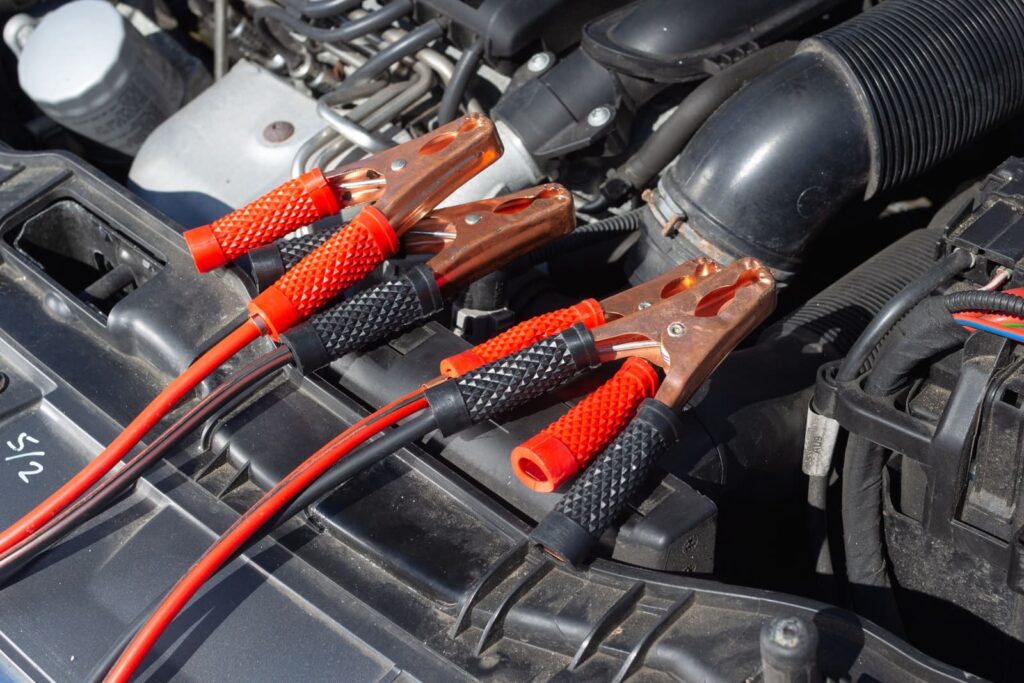
How can I jump-start a car with a dead battery?
Remember: all batteries contain acid and can cause injury.
- Wear safety glasses and protect your skin
- Connect the positive cable to the positive terminal of the dead battery.
- Connect the other end of the same cable to the positive terminal of another vehicle’s battery.
- Connect the negative cable (black) to the negative terminal of the donor battery.
- Ensure the final connection of the cable is with the engine block of the faulty vehicle.
- Start the broken vehicle and disconnect the cables in reverse order.
Tag: recharge car battery