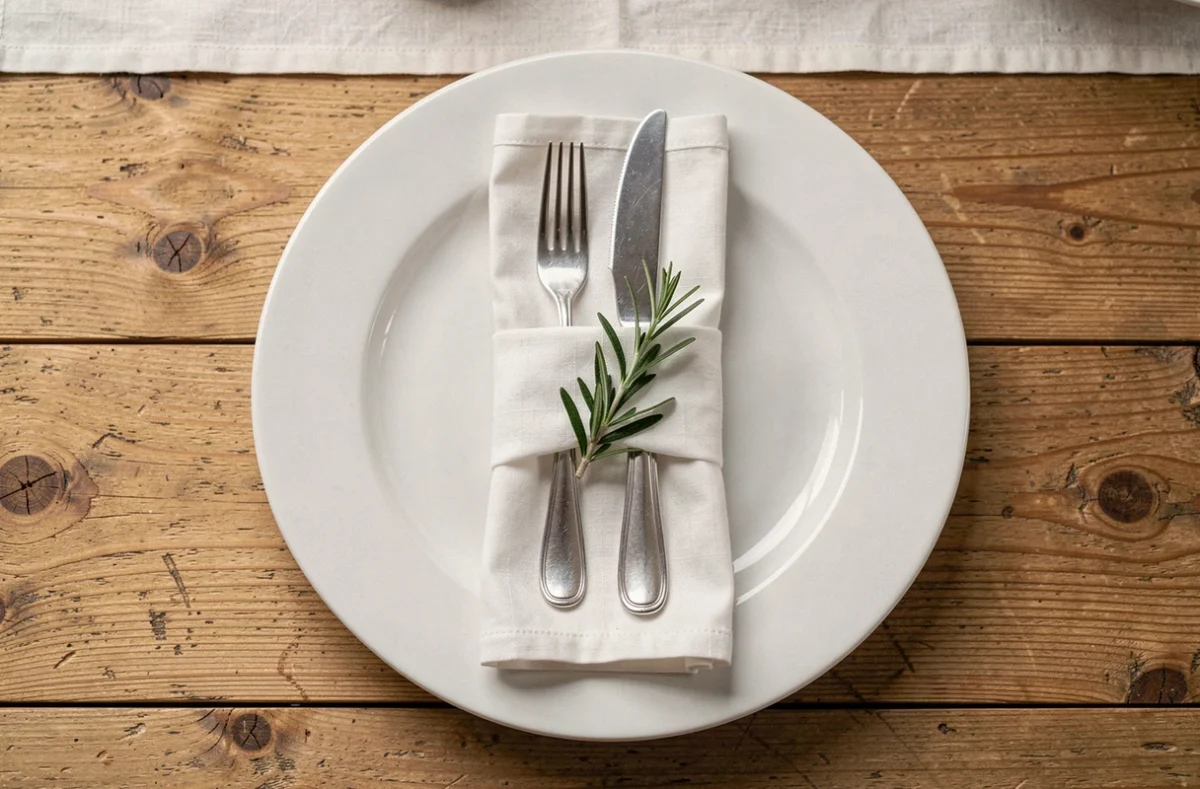
On a reception table, a napkin that holds the cutlery in place helps keep things tidy as guests sit down. This cutlery-pocket fold serves two purposes: it creates an organized table setting and adds a decorative touch without the need for extra accessories. The technique involves a few precise folds, but the final result depends as much on how you fold the napkin as on the fabric you choose.
Cotton or polyester: which napkin holds a crisp cutlery-pocket fold?
People often start by looking for a tutorial without considering whether the napkin they have on hand is suitable for folding. A napkin that is too thin slips, while one that is too stiff resists forming a neat pocket.
Cotton drapes naturally and is highly absorbent, but it wrinkles easily. To create a crisp fold, iron the napkin while it is slightly damp, then fold it right away. After washing, cotton needs to be ironed every time to restore the crispness of the fold.
Polyester, on the other hand, is easier to smooth out and holds its shape better after several machine washes. For frequent use (regular family meals, community events), it is a practical choice. The pocket stays in place even if you folded the napkins the day before.
For anyone looking to fold a napkin into a cutlery pocket for a wedding or a large gathering, a cotton-polyester blend offers a good compromise: enough structure to hold the fold, with enough flexibility to wrap around the cutlery without forcing it.
- Pure cotton: elegant but delicate fold; ironing required before every table setting
- Polyester: long-lasting fold, less luxurious feel, ideal for repeated use
- Cotton-polyester blend: a balance of appearance and easy care, suitable for special occasions
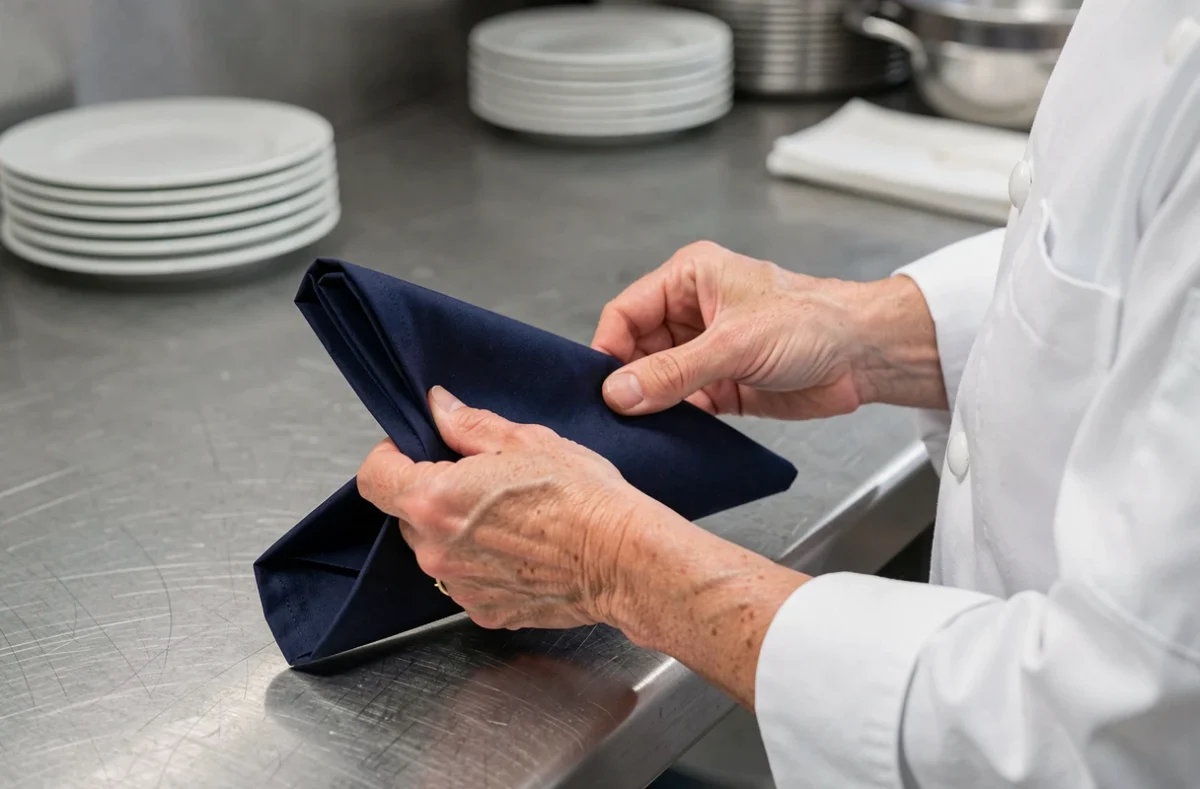
Cutlery-pocket napkin fold: step-by-step instructions
Work on a clean, flat surface with a square napkin measuring at least 40 cm on each side. The smaller the napkin, the narrower the pocket, and the more likely the cutlery is to stick out.
Form the base of the fold
Lay the napkin flat with the reverse side facing you. Fold it in half to make a rectangle, with the open edge at the top. Then fold the top-right corner toward the center to create a diagonal. This first fold determines the depth of the pocket.
Create the pocket
Turn the napkin over and fold both sides toward the center. The edges should overlap slightly at the back. This overlap keeps the pocket from opening when you slide the knife and fork inside.
Turn the napkin over again. The pocket will appear at the front, open at the top. If the fold gapes, press firmly along the edges with your hand or use a hot iron while the fabric is still folded.
Insert the cutlery
Slide in the knife first (blade facing inward), then the fork. You can add a teaspoon or dessert knife depending on the menu. There is no strict rule about the order, but placing the heaviest piece of cutlery at the bottom helps stabilize the whole arrangement.
Table linen care: how to preserve the quality of your folds
A carefully folded napkin loses its impact if it is stained, discolored, or frayed at the edges. Before putting napkins away after a meal, set aside any with stubborn stains so you can treat them separately.
Used linen should be kept separate from clean linen and stored in a dry place. A napkin stored in a damp cupboard can develop odors that persist even after washing. A damaged or musty napkin should not be returned to the clean linen supply, even if it has been washed.
For cotton napkins, washing at 60 degrees is sufficient in most cases. Polyester can withstand similar temperatures but dries faster, reducing the risk of mildew if you cannot hang it up right away.
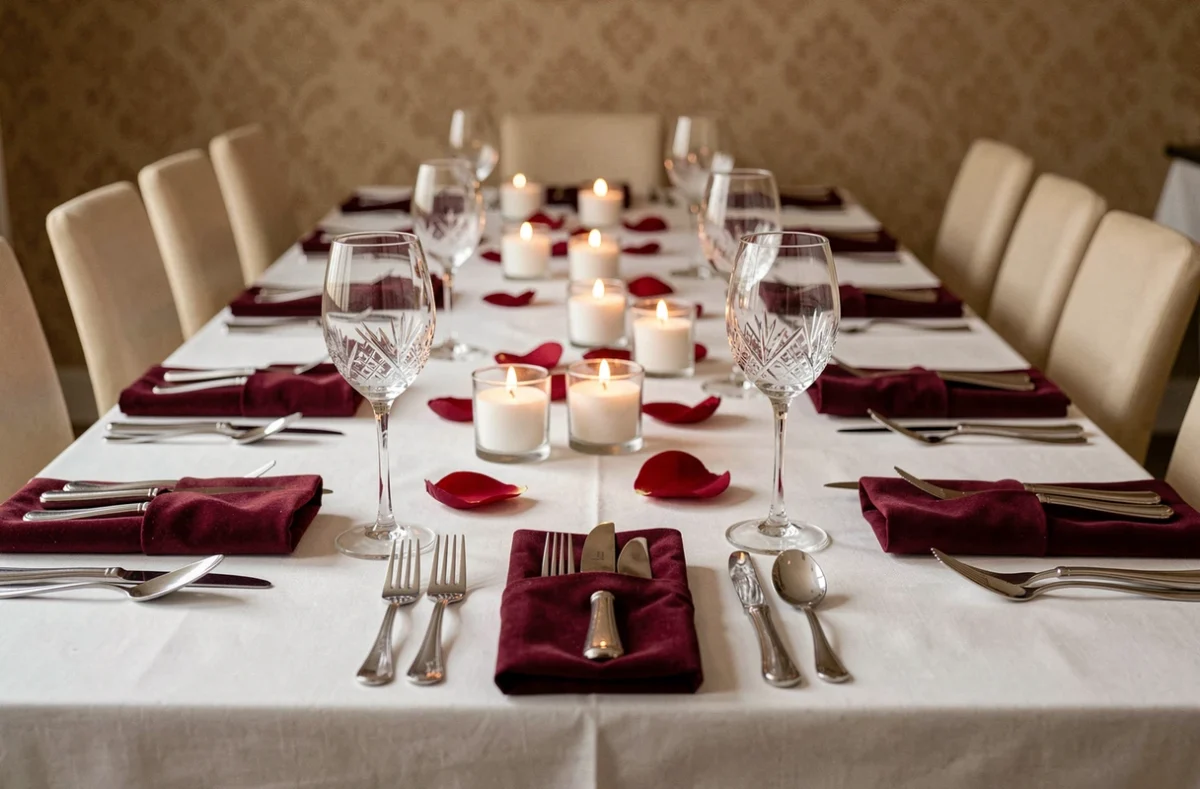
Cutlery-pocket fold variations for different types of meals
The simple pocket fold described above works for most occasions. For a formal dinner, you can create a double pocket by folding two successive diagonals, allowing you to separate the knife and fork into two distinct compartments.
For an outdoor meal (barbecue, organized picnic), a roll fold works better. Roll the napkin around the cutlery and fold the ends inward. The roll protects the cutlery from wind and dust, which an open pocket cannot do.
- Formal dinner: double pocket with two compartments, ironed cotton napkin, stainless steel or silver cutlery
- Casual meal: simple pocket, colored or patterned napkin, everyday cutlery
- Buffet or standing reception: tightly rolled napkin, thick fabric, easy to pick up with one hand
- Outdoor meal: roll closed at both ends, wind-resistant polyester napkin
Adapt the fold to the number of guests
For more than twelve place settings, folding the napkins the day before saves valuable time on the day of the meal. Polyester or a cotton-polyester blend holds its folds better over time. If you use pure cotton, a quick press with the iron in the morning will sharpen the edges.
For large gatherings, preparing all the napkins in a batch (repeating the same motion) produces a more consistent result than folding each napkin individually between other table-setting tasks.
The cutlery-pocket fold is one of the simplest ways to organize a table without buying extra decorations. The fabric you choose determines how well the fold holds over time, and careful linen care extends the life of your napkins well beyond a single season of entertaining.