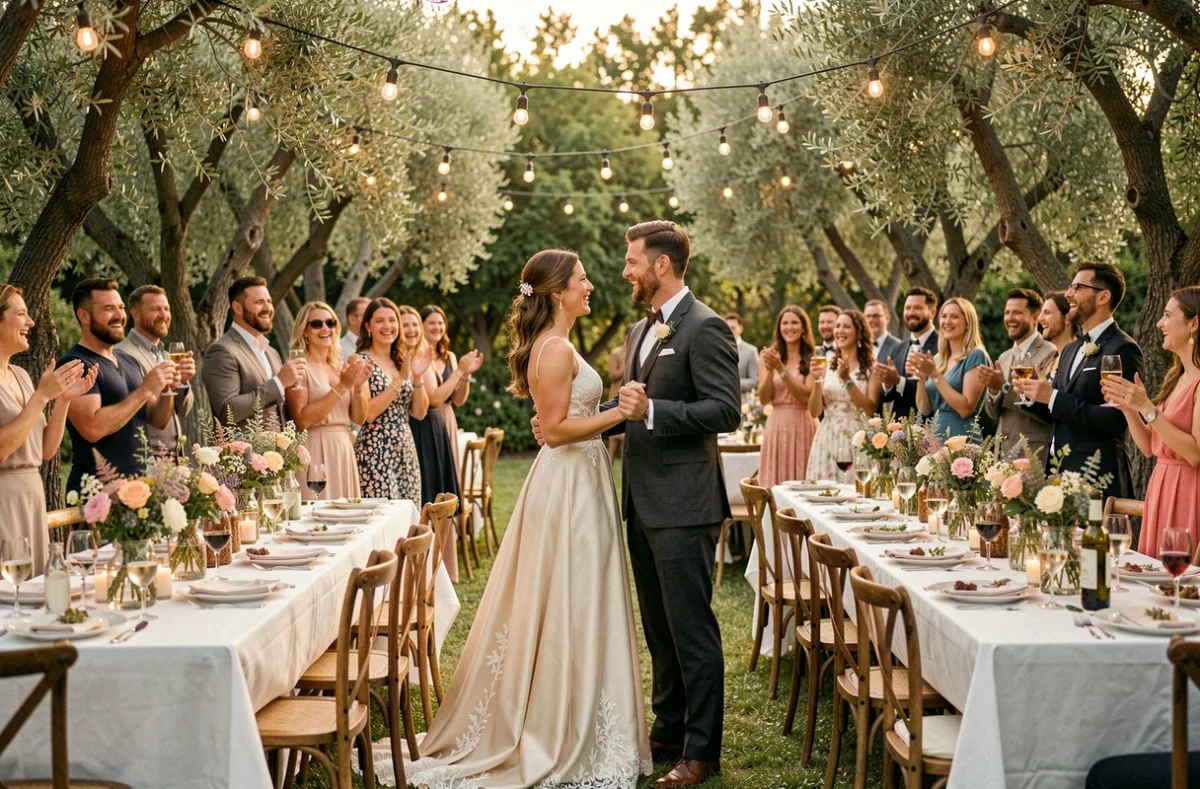
A wedding where guests spend half the meal with their noses in their phones sends a clear signal: there is a lack of connection between the key moments of the day. Wedding entertainment does not serve to fill the void. It creates bonds between people who do not know each other, it reignites energy when waiting sets in, and it gives the couple a collective memory rather than a succession of dishes.
Designing wedding entertainment accessible to all guests
Most idea lists assume that every guest can stand up, hear the instructions, and participate physically. In reality, a wedding table mixes grandparents with hearing aids, three-year-old children, introverted guests, and friends ready to take the stage. Accessibility is key to the success of an activity, much more than its originality.
Recent recommendations suggest a distinct area away from the dance floor, with reduced sound volume, to accommodate children, elderly guests, or those who are sensitive to noise. Ensure there are enough seats, readable signage, and for each game, an observer role that allows enjoyment of the spectacle without pressure. A quiz about the couple, for example, works just as well for the one holding up their sign as for the one watching the answers from their chair.
You can browse the animations on the Cœur de Mariage website to find formats that adapt to different audiences, from a calm photobooth to more physical group games.
Sound entertainment and regulations: what your venue requires
Have you noticed that some venues cut off the music at a specific time? This is not a whim of the owner. The Public Health Code sets a limit of 102 dB(A) for 15 minutes for venues receiving the public with amplified sounds, and the Environmental Code imposes a maximum emergence of 3 dB for neighbors in certain enclosed spaces.
Before booking fireworks or a live band, check two points: the existence of a noise impact study and the possible presence of a limiter in the reception hall. A poorly calibrated limiter can cut the sound right in the middle of the best man’s speech. Discuss this with your entertainer or DJ to adjust the placement of speakers and the scheduling of musical highlights.
Three wedding activities that create connections among guests
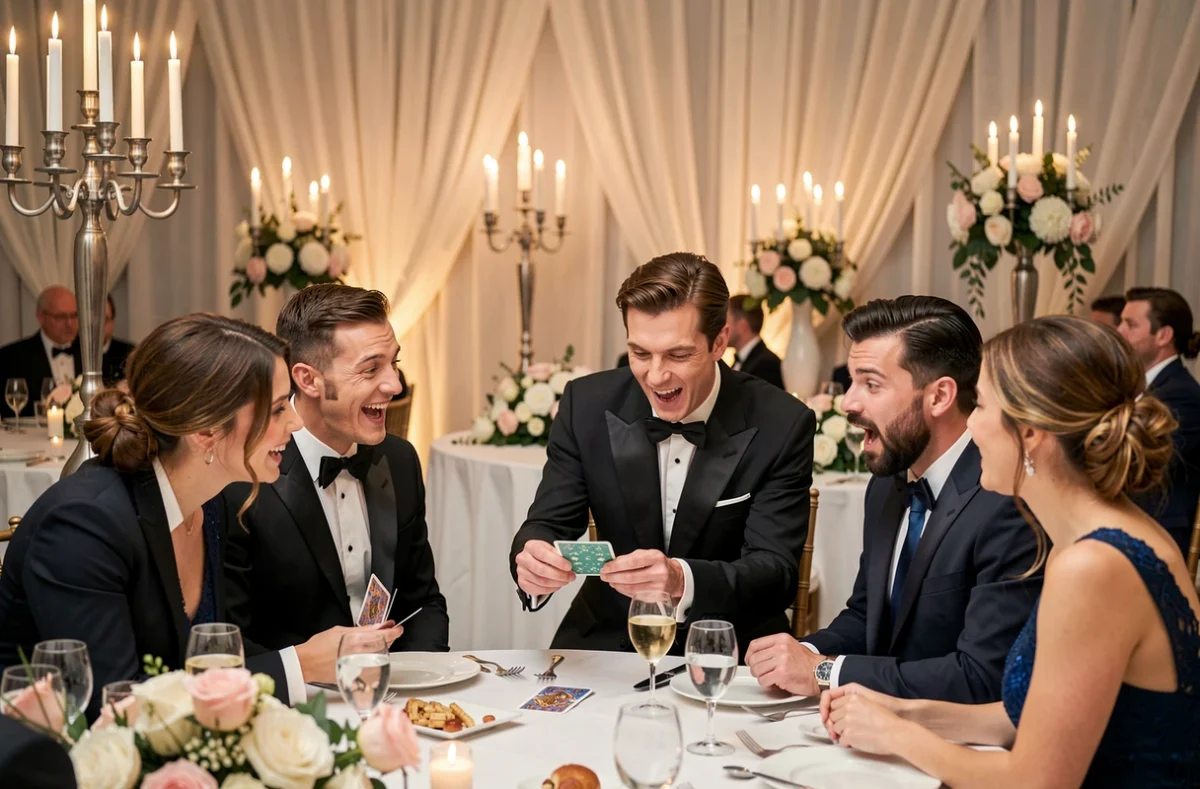
Instead of a long list, let’s focus on three formats that work at different times of the day and meet a real need: breaking the ice, occupying waiting time, and reigniting energy.
The personalized quiz during the cocktail hour
The cocktail hour is when groups tend to stick together. A quiz of ten questions about the couple, distributed on cards placed near the bar, encourages guests to consult with each other across tables. The quiz replaces forced conversation with a playful pretext. Prepare specific questions (date of the first trip together, groom’s favorite dish) rather than generalities. The answers can be revealed by the couple on the microphone just before moving to the table.
The “he and she” game between courses
The couple sits back to back, each with two signs. The host asks questions about their life together. This format lasts about ten minutes, requires no heavy logistical preparation, and works even in a compact reception hall. The secret: vary the tone between tender questions and embarrassing ones to keep the attention of the entire assembly.
The photobooth with thematic instructions
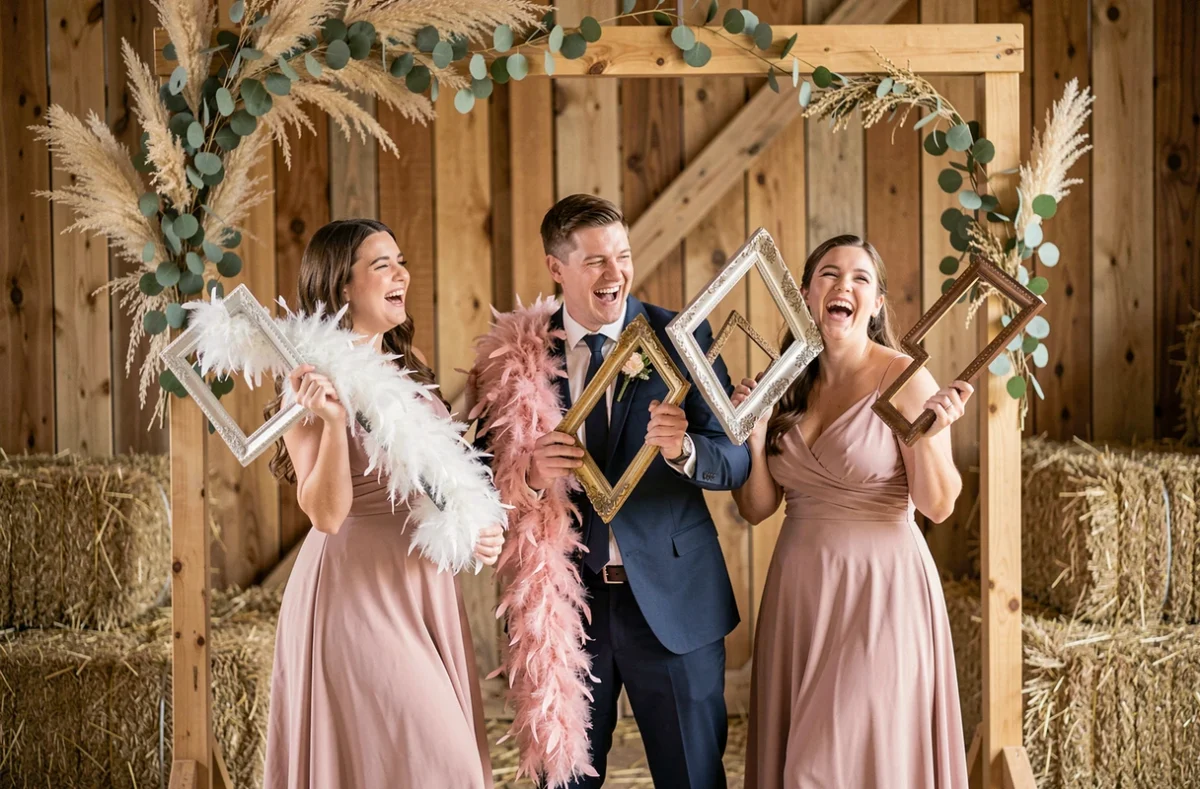
A photobooth without a narrative frame is just a mirror with cardboard mustaches. To make the activity produce memorable souvenirs, tie it to the theme of your wedding. A rustic wedding can offer dried flower crowns and slates to write a message to the couple. A more urban wedding can incorporate neon lights and quirky accessories.
- Place the photobooth in a passageway, not in a secluded corner: a visible queue attracts the curious
- Limit accessories to about ten to avoid clutter and encourage creativity
- Provide instant printing or a QR code to a shared gallery, as unretrievable photos are forgotten photos
Framing surprises from the best man and family
The personalized song, the retrospective video, the surprise choreography: these activities come from loved ones, not the couple. The problem is that they often escape the planning. A twenty-minute speech delays dessert. A choreography launched without notifying the DJ creates an awkward silence.
Set a simple framework with your best man:
- Each intervention lasts a maximum of seven minutes, including speeches
- The best man informs the DJ and caterer of the chosen time slot at least a week in advance
- Videos are tested on the venue’s projection equipment, not just on a phone
- A well-coordinated surprise leaves a greater mark than a messy improvisation
Children’s area and quiet zone: two underestimated setups
A children’s corner with coloring pages on a table is not enough to occupy a group of five to twelve-year-olds for six hours. Plan a designated area, supervised by a dedicated person (babysitter or willing relative), with rotating activities: face painting, board games, cupcake decorating workshop.
The quiet zone, however, is not just for children. It also accommodates tired guests, those with hearing aids who need a sound break, and parents who are breastfeeding. Providing a retreat space prevents early departures. A few armchairs, soft lighting, and sufficient distance from the speakers transform an unused corridor into a real service for your guests.
The number of activities matters less than their timing throughout the day. Two or three well-placed formats between the cocktail hour, the meal, and the dance party are enough to pace the reception without exhausting anyone. Leave room for what makes a wedding successful beyond games: spontaneous conversations, reunions among friends, and dances that were not on any schedule.