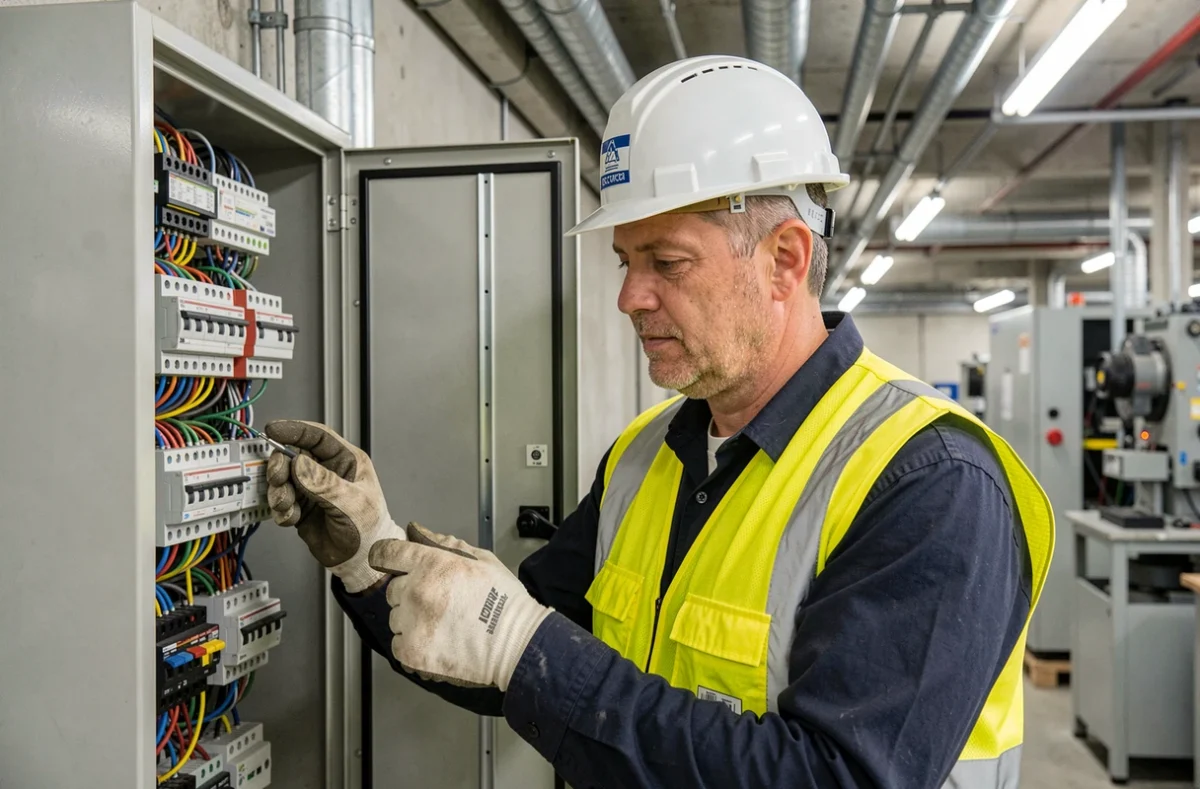
When an employer signs an electrical authorization certificate, they are not simply validating training completed by an employee. They are confirming that the person can safely carry out specific tasks on identified installations. In 2026, the key question for businesses is no longer which symbol to choose, but whether the authorization issued matches the actual conditions of work on site.
Matching electrical authorizations to actual tasks: a weak point for businesses
The NF C 18-510 standard is clear: authorization is tied to the tasks actually assigned, not to the employee’s qualifications or generic job title. An electrician authorized at BR level by one employer may be authorized at B1V level by another because the operations differ.
The problem rarely lies with the training itself. It arises when the employer has to translate the training provider’s assessment into an authorization suited to the site. Two mistakes are common.
- The authorization is too broad: an employee is granted B2V authorization even though they never perform live work in the vicinity of exposed live parts, and only carries out replacement work. BS or BR authorization would be sufficient, and the scope would be clearer for the person responsible for lockout.
- The authorization is not updated: a technician changes assignments, moving from a low-voltage site to a building with high-voltage switchgear, but no one reassesses their authorization. Without H0 authorization, they are exposed to an environment for which they have neither the training nor the authorization.
- The authorization does not account for the work context: working in an air-conditioned plant room or in an outdoor electrical cabinet on a rooftop involves different safety constraints, even if the symbol is the same.
To anticipate changes to electrical authorizations in 2026, employers would benefit from formalizing a suitability assessment process rather than simply renewing training when it expires.
Employer liability: what the French Labour Code actually requires
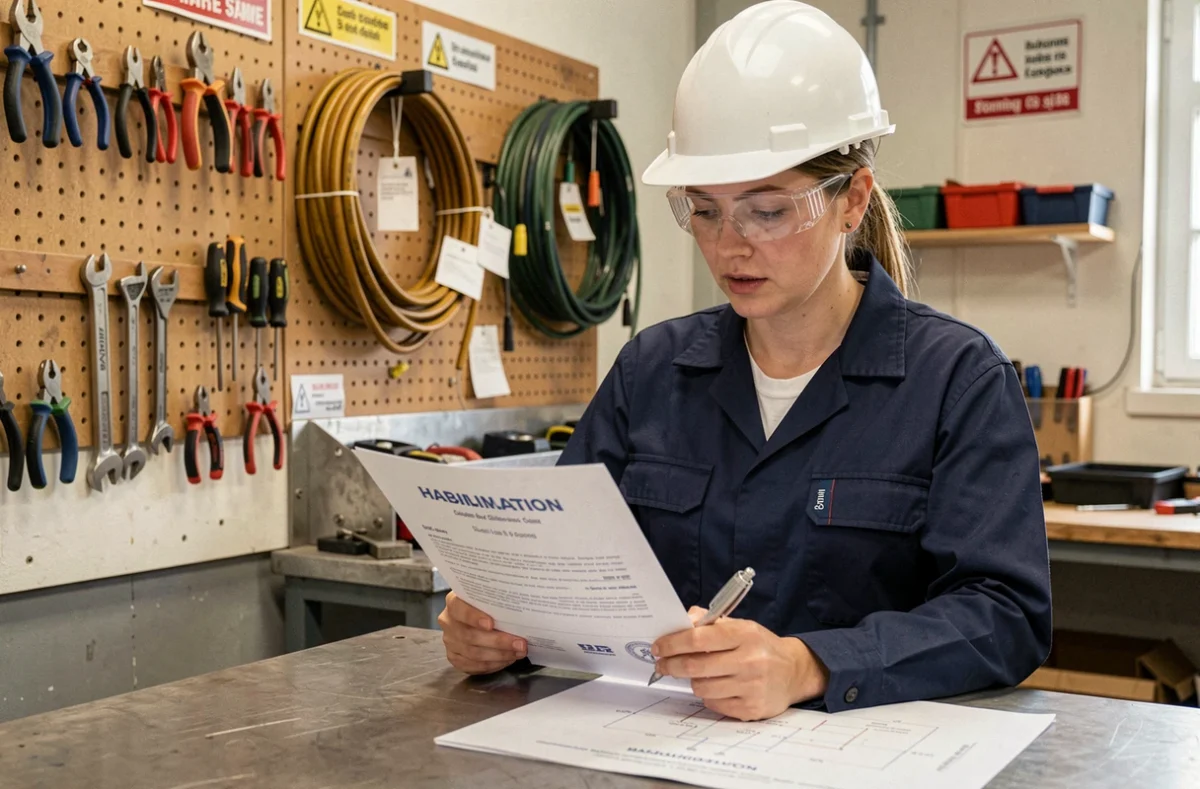
The French Labour Code (Articles R. 4544-9 and R. 4544-10) requires employers to issue authorization after ensuring that the worker has received appropriate training, has been declared medically fit, and has been assigned tasks that match the authorization symbol. It is the employer who grants authorization, not the training provider.
This distinction has direct consequences in the event of an accident. If an employee works on an installation with an unsuitable authorization, the employer may face criminal liability, even if the initial training was compliant. The authorization signed by the employer constitutes a commitment to compliance.
Refresher training and reassessment: two separate requirements
Refresher training, recommended every three years by the NF C 18-510 standard, is intended to update skills. Reassessment, by contrast, is required whenever conditions change: a new site, new installations, or a change in role. Up-to-date refresher training does not remove the need for reassessment if the scope of work changes.
Many businesses schedule refresher training as a calendar event without checking whether the course content still matches the employee’s duties. The authorization is renewed unchanged, simply out of habit.
Employer checklist: electrical authorization and site conditions
The table below summarizes the checks an employer should complete before signing or renewing an authorization. It compares common practice with what the standard actually requires.
| Check | Common practice | NF C 18-510 requirement |
|---|---|---|
| Choice of symbol | Same as the previous authorization or standard job title | Based on an analysis of actual tasks and the site’s voltage domain |
| Refresher training | Scheduled every 3 years, with standard content | Tailored to the operations the employee actually performs |
| Change of site or role | No systematic reassessment | New suitability assessment required |
| Training provider’s assessment | Treated as final approval | Advisory only; the decision remains with the employer |
| Working conditions (environment, access) | Rarely documented in the authorization | Must be included in the safety instructions provided to the employee |
This table highlights a recurring gap: most instances of non-compliance are not caused by a lack of training, but by a failure on the employer’s part to formalize the process.
NF C 18-510 amendments: what’s changing for photovoltaic work and lockout
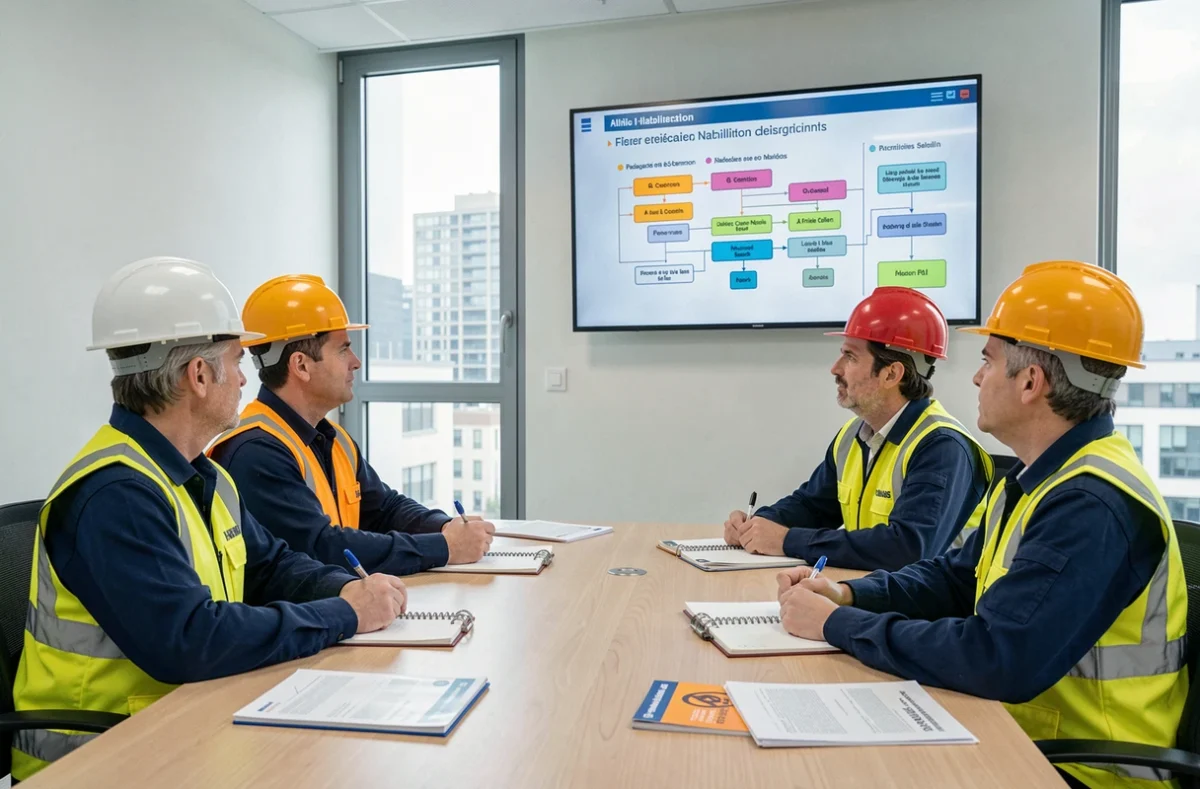
Amendments A1 and A2, incorporated into the standard since late 2024, introduce changes that directly affect businesses working on specific types of installations.
Amendment A2 introduces the BF and HF symbols for work on photovoltaic installations. Until now, this work was covered by generic authorizations that did not account for the specific nature of the direct current generated by solar panels. BF and HF authorizations address the specific risks of photovoltaic systems, where it is sometimes impossible to fully de-energize the system while the modules are exposed to light.
Approach distances and lockout
Amendment A2 also clarifies minimum approach distances (DMAC) and lockout procedures. For employers, this means that the safety instructions provided to authorized employees must be updated if they refer to the previous values. A valid authorization combined with outdated site instructions creates a gap that a labour inspector may identify.
Amendment A1, published in 2020, had already added work on electric and hybrid vehicles and machinery. In 2026, automotive maintenance and logistics businesses that have yet to incorporate these specific symbols are several years behind on compliance.
Compliance with electrical authorization requirements is about more than renewing a training certificate on time. It depends on an assessment that only the employer can carry out: matching the symbol to the tasks, site, and working conditions. An authorization is a management decision, not an administrative form to rubber-stamp.