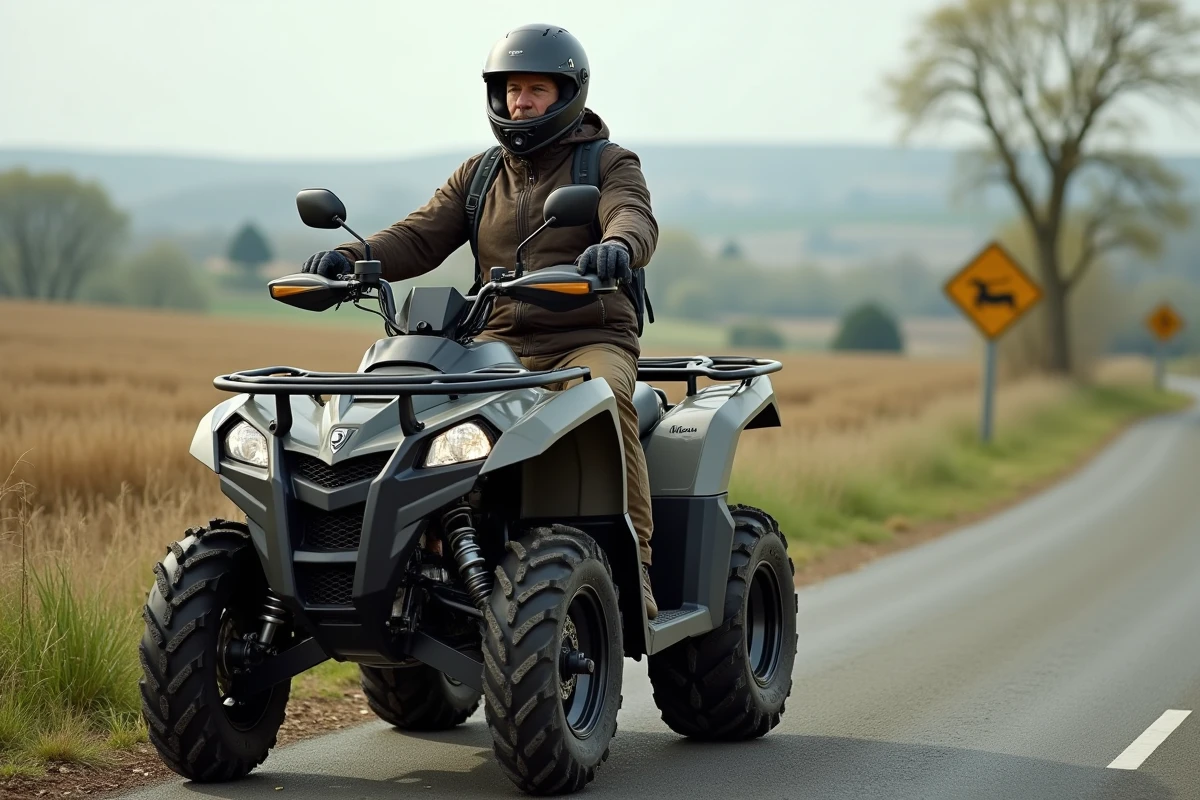
The homologation of Maga Quads in France does not grant free rein on all road networks. An agricultural quad that is declared and properly homologated can indeed travel on public roads, but only within the framework of professional activities. The same vehicle, without this recognized agricultural use, remains confined to private land. The regulations also make a clear distinction between quads and SSVs, each with specific rules, procedures, and intended uses. For each category of vehicle, legislation imposes an administrative process marked by strict technical criteria and inspections, particularly since the introduction of mandatory technical inspections. Any mistake in the procedures or the omission of a step exposes one to sometimes hefty penalties, both financial and administrative.
Understanding the regulatory framework for agricultural quads in France: real requirements
In France, the status of agricultural quads lies at the intersection of road safety and the daily needs of operators. The time when these machines were merely an auxiliary tool is over: it is now impossible to operate a homologated agricultural quad without adhering to the highway code and the rural code. One must obtain a valid homologation, register the vehicle, and strictly comply with the classification established by law.
A quad intended for agriculture cannot circulate without meeting several stringent conditions: compliance with European type approval, specific safety equipment, and adherence to all road regulations. If the vehicle is used for professional tasks, labor laws also require driver training, information on hazards, and appropriate preventive measures related to the machine.
To avoid missteps and effectively complete one’s file, going through the homologation of maga quads with AXX Auto often represents the safest solution. This approach ensures that the vehicle fully meets current requirements and speeds up the acquisition of the registration certificate. The user thus ensures perfect clarity in their file, whether it concerns traveling on the road or managing all regulatory obligations related to their operation.
The boundary between agricultural quads and recreational vehicles has strengthened in recent years with the evolution of regulations. The increasingly stringent technical rules aim to protect all users: using a quad is never a trivial act on public land; vigilance and rigor have become essential reflexes.
Quad or SSV: two worlds, two regulations for agriculture
Choosing between a quad and an SSV (Side-by-Side Vehicle) is not just a matter of terrain usage; the difference also lies in regulatory aspects. The homologated agricultural quad is steered with handlebars and must have either an isolated or community type approval for registration. Like any vehicle, it must comply with the highway code and the obligation for civil liability insurance.
The SSV, on the other hand, changes the game. It is equipped with a steering wheel, seat belts, and sometimes a closed cabin. This configuration alters the risk approach and necessitates thorough checks: enhanced braking system, proper lighting, and retention devices. In farms, SSVs are used for transporting loads or tools and require more advanced homologation, ensuring reliability during agricultural work.
To concretely grasp the differences in regulations and practices, here are the main points to remember:
- Quad insurance: every vehicle must be covered, at a minimum for civil liability. Depending on the activity, the value of the equipment, or the frequency of trips, certain optional guarantees may be relevant.
- Uses: the quad is distinguished by its maneuverability on difficult terrains, while the SSV focuses on comfort, stability, and notable loading capacity. For farmers, these are two complementary approaches in daily life.
If the vehicle is not type-approved in series, the isolated type approval procedure remains essential. Compiling a precise technical file allows for obtaining the registration certificate, an indispensable pass for regular circulation and meeting insurers’ requirements.
Homologation and technical inspection of Maga Quads: the important steps
It is impossible to skip the various regulatory steps of the Maga Quad homologation. The first always involves checking technical compliance: each quad must display an identification number engraved on the chassis, a unique mix of numbers and letters. Without this official inscription, any process is immediately blocked, making it impossible to proceed.
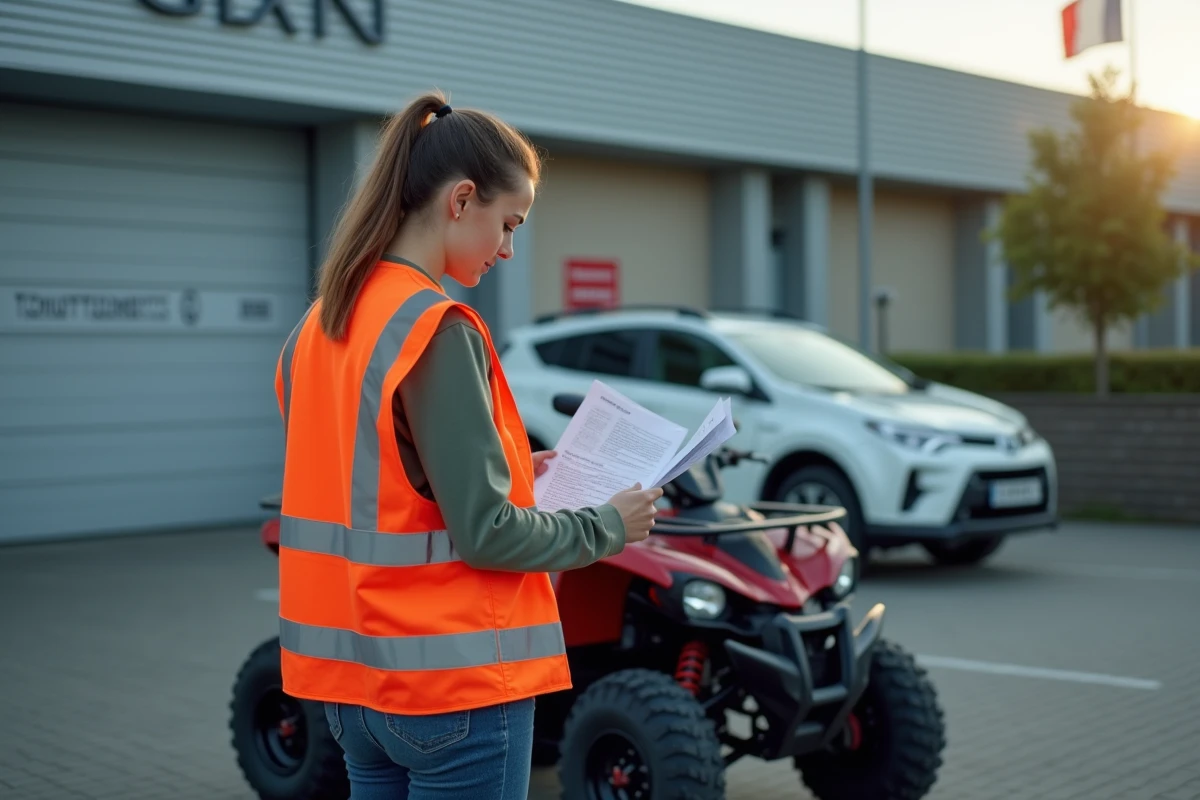
Next comes the careful assembly of a technical file. It includes proof of proper brake functioning, all certificates of compliance, as well as justification of the vehicle’s power and classification. The registration request is made at the prefecture or directly online; once the certificate is received, the quad is authorized to circulate on public roads under the specified conditions.
To limit mistakes during the procedure, it is better to follow a precise sequence of actions:
- Check the quad’s compliance on all regulatory aspects.
- Compile a complete technical file, without forgetting anything.
- Verify the condition of the equipment: brakes, lighting, signaling must be impeccable.
- Digitize each document submitted to facilitate tracking and any subsequent verifications.
The technical inspection remains reserved for certain agricultural quads, but in practice, regularly inspecting the equipment’s condition and overall compliance has become a reflex. This vigilance protects operators, limits the risk of accidents, and ensures that vehicles meet the required regularity during each circulation. Adhering to these obligations is not trivial: they shape the reality of an agriculture that combines mechanical innovations with a culture of prevention, from workshops to country roads.