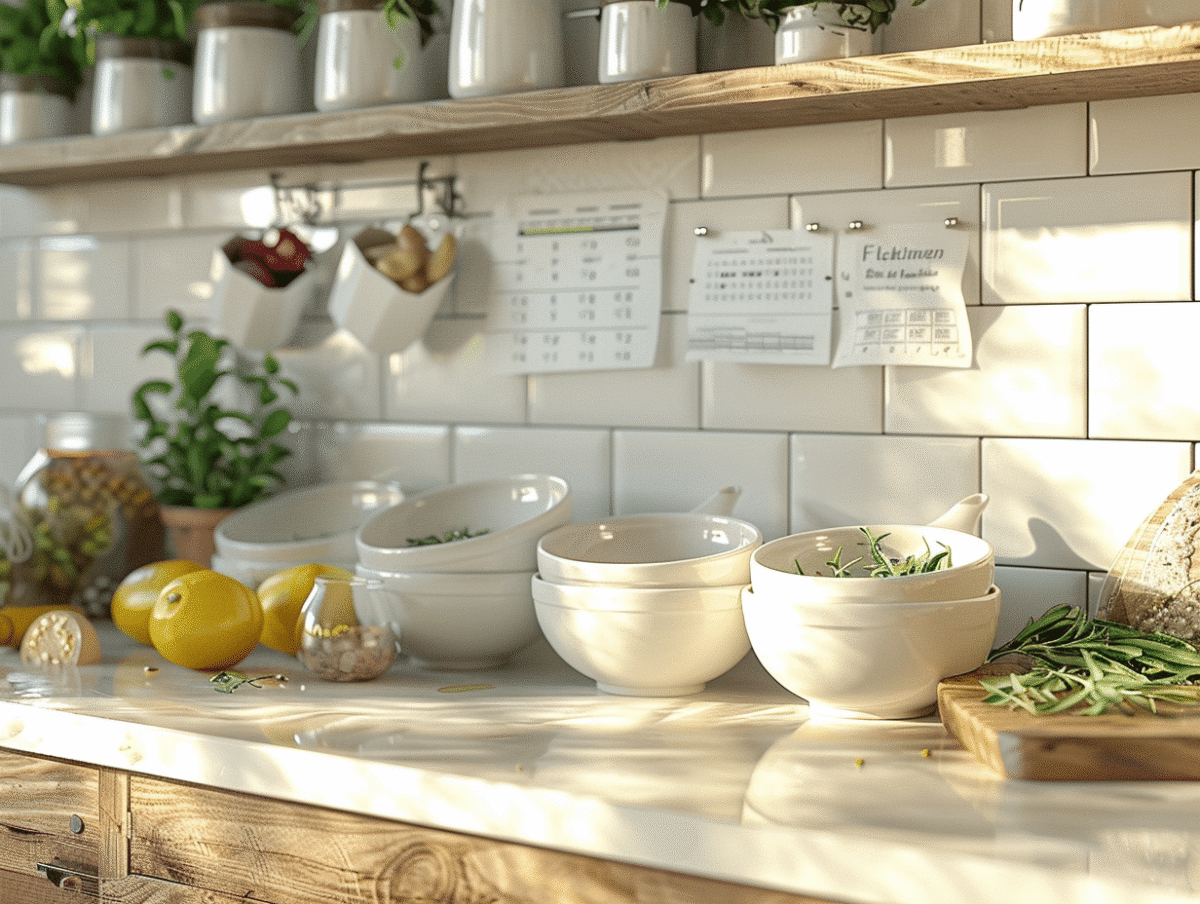
In the culinary world, the art of precision reigns supreme, especially when it comes to measuring liquids. Whether one is a Michelin-starred chef or a passionate home cook, juggling milliliters, tablespoons, or ounces can be fundamental to the success of a recipe. Liquid measurement conversions thus become an essential skill, allowing for the adaptation of recipes from one system to another, whether following a European preparation in milliliters or an American recipe in cups. Mastering this skill ensures fidelity to the original flavors and the success of the dishes.
Understanding Liquid Measurement Units in Cooking
The arsenal of measurement units in cooking includes a variety of tools and concepts suited for liquid ingredients, from the most basic to the most specific. A teaspoon represents approximately 5 milliliters, while a tablespoon is equivalent to 15 milliliters. For larger volumes, the cup, often used in Anglo-Saxon recipes, refers to 240 milliliters. These measurements are crucial as they directly influence the texture and taste of the preparations. Understand that a slight deviation can turn a creamy sauce into a watery mixture or alter the consistency of a cake batter.
In the metric system, the liter is the base unit for liquids, easily divisible into centiliters and milliliters for increased precision. To express 1/4 liter in cl, we refer to 25 centiliters; a basic yet essential conversion. Mastery of these conversions allows for smooth navigation between different recipes and ensures that proportions remain consistent, whether it’s a refreshing gazpacho or a delicate emulsion.
The conversion of measurement units is a numerical dance where every step, every digit, matters. It is not merely about matching; it is the expression of rigor, a discipline that is essential in crafting refined and controlled dishes. Liquid ingredients, measured in volumes such as tablespoons, teaspoons, and cups, require special attention to ensure that the final dish honors the cook’s intention.

Techniques and Tips for Accurate Conversions
Precision in liquid measurement conversions is the cornerstone of successful cooking, especially when adapting a recipe for a large number of guests, such as for a Pizza Margherita for 300 people. To convert milliliters to centiliters or vice versa, a conversion chart proves to be a valuable tool. This allows for easy juggling between different measurement units, ensuring that proportions are adhered to strictly.
Using a measuring cup is also recommended for accurately measuring volumes. This tool, marked in various measurement units, offers ease of reading and helps avoid dosage errors that could affect the quality of the final dish. Conversion then becomes a matter of sight, reading, and respecting the quantities indicated.
For seasoned professionals, experience and intuition in the kitchen play a significant role in the art of conversion. These skills, acquired over the years, often allow for adjustments in measurement without always relying on visual aids. However, consider that resorting to more empirical methods does not exempt one from verification through more formal means, especially when ensuring the consistency of a recipe in large quantities.
Conversions are sometimes perceived as a challenge, a test of applied mathematics in gastronomy. Yet, they prove to be indispensable allies for crafting precise and reliable recipes. From measuring tools to practical strategies, cooks, whether professionals or amateurs, must arm themselves with these techniques to excel in the culinary arts. A recipe designed for a specific number of individuals can be adjusted without fear, provided that these tips are applied with rigor and attention.